Runs where developers work
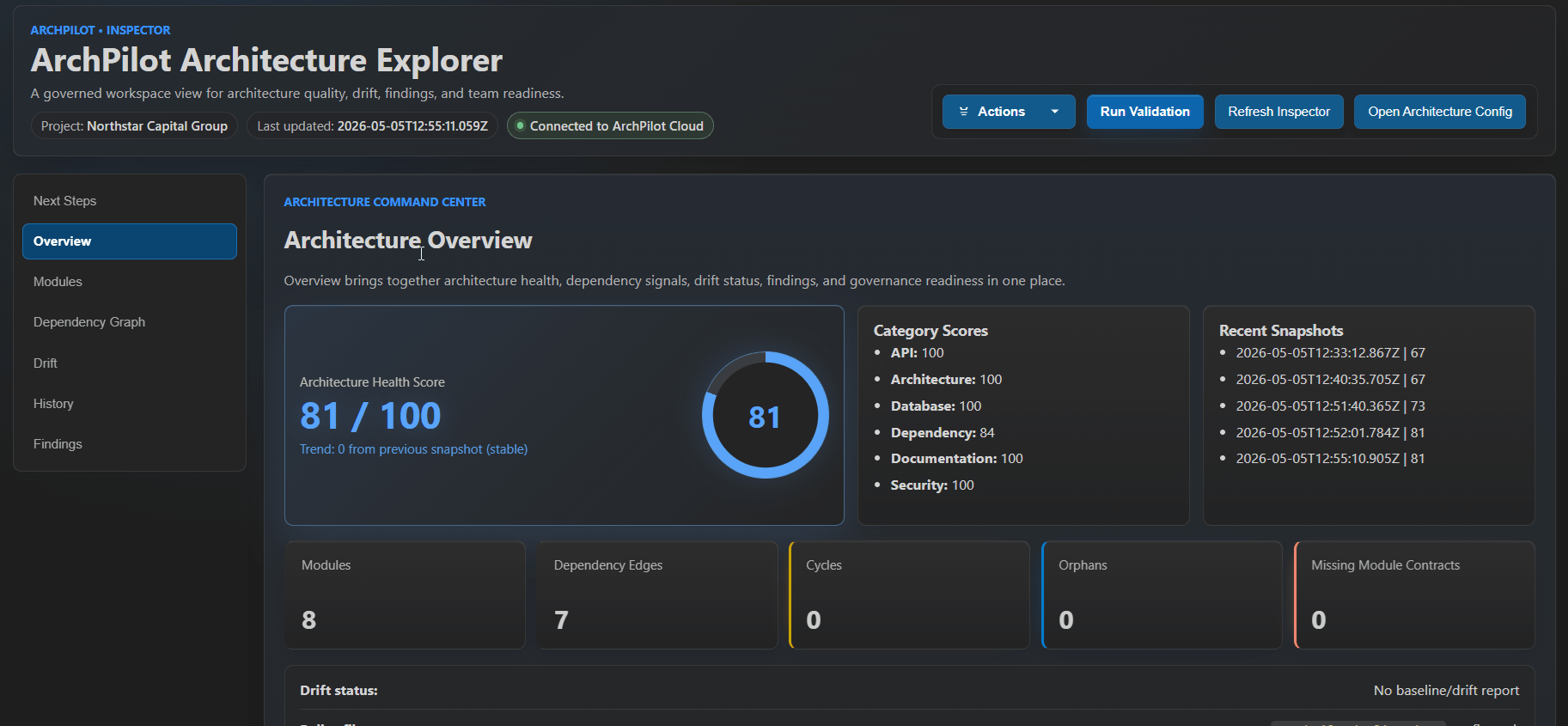
The VS Code extension and CLI validate architecture locally so developers get feedback before they push or open a pull request.
ArchPilot Cloud
ArchPilot is a local-first architecture governance platform for engineering teams that need to move fast without losing architectural control.
Validation stays local in the VS Code extension and CLI. Governance visibility lives in the cloud. Only architecture metadata is synced for findings, scores, policies, exceptions, ownership context, and history.
Local-first architecture validation
ArchPilot keeps the validation loop in the developer workflow so teams can work offline, get deterministic results, and run the same checks locally and in CI.
The VS Code extension and CLI validate architecture locally so developers get feedback before they push or open a pull request.
Validation does not depend on a hosted scanning service. Teams can work offline and still get the same deterministic results.
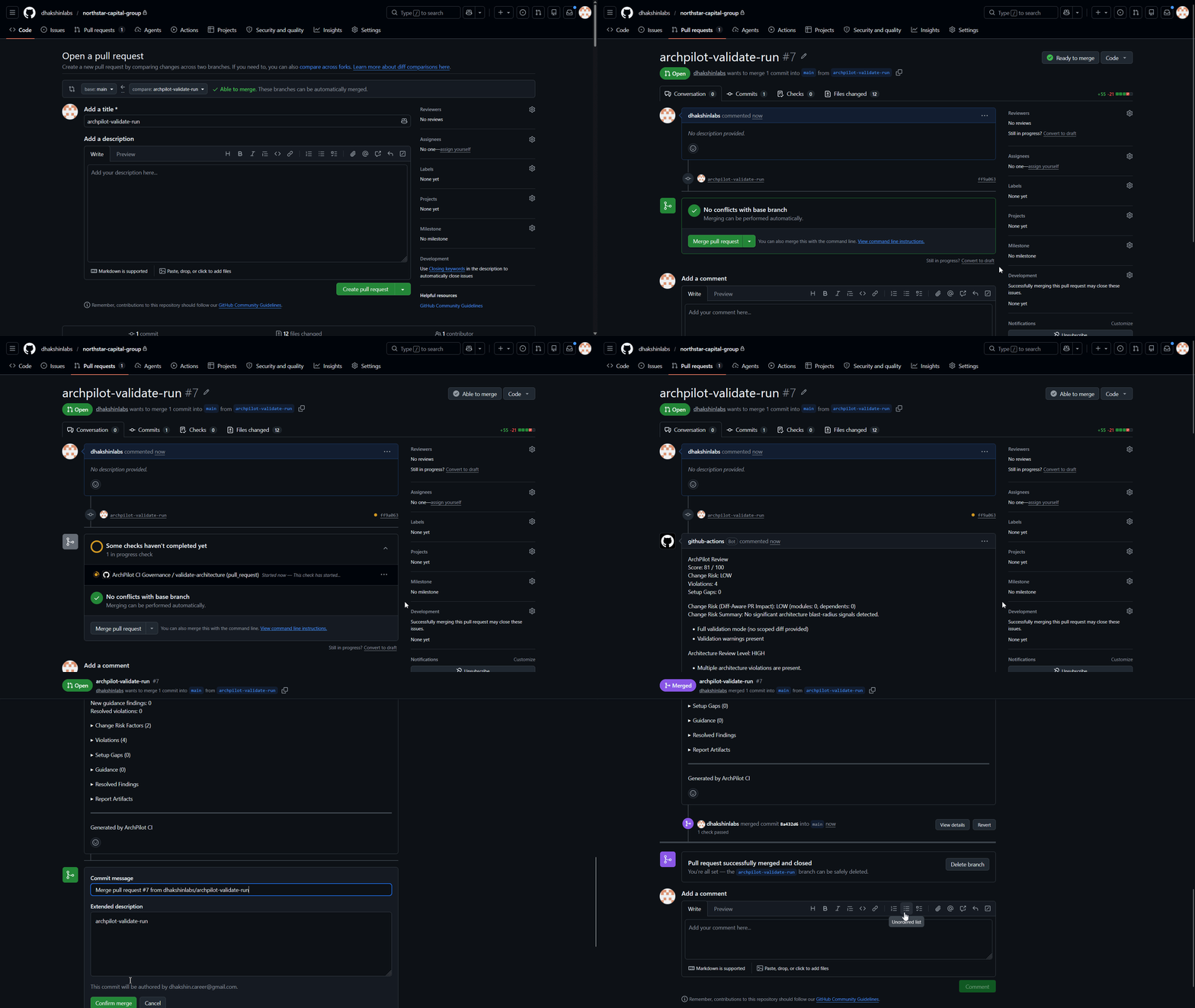
The same local validation flow can run in CI, which keeps architecture enforcement consistent across developer workflows and automated pipelines.
Cloud governance workspace
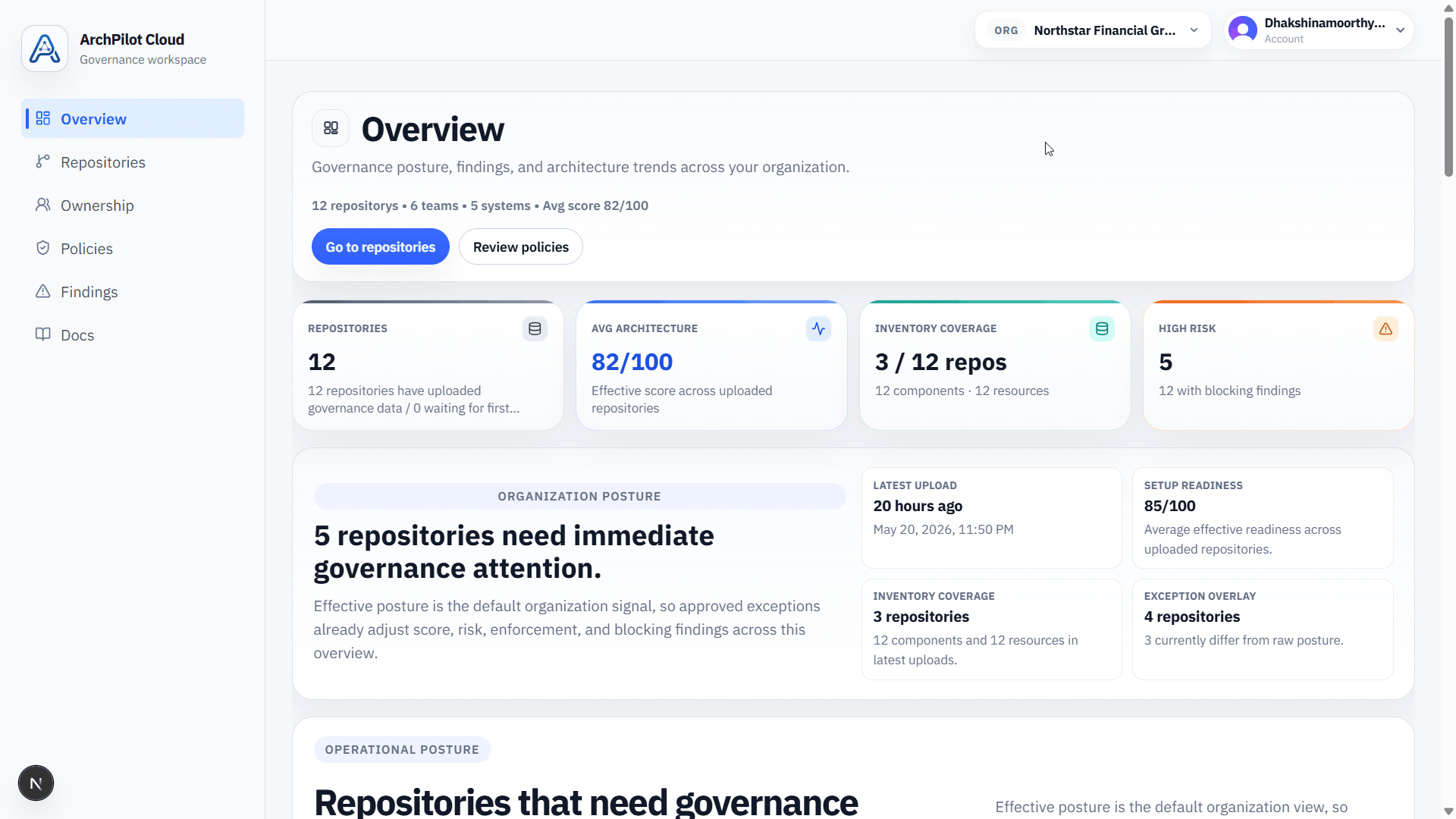
ArchPilot Cloud organizes architecture metadata into a shared workspace for findings, scores, trends, policies, exceptions, ownership, and multi-repository governance.
Track governed repositories, synced findings, and architecture posture in a shared workspace instead of relying on local results alone.
Review repository scores and snapshot history over time so architecture changes stay measurable and visible beyond a single run.
Coordinate architecture governance with policy results, exception workflows, and ownership context across teams and repositories.
Security and privacy
ArchPilot Cloud does not store source code. Only architecture metadata is synced so organizations can use the governance workspace without moving proprietary code into the product.
The architecture metadata model is designed for teams with security, IP, and compliance concerns that still need shared architecture visibility and governance.
Examples of architecture metadata
AI-assisted development
Faster AI-assisted development increases the risk of architecture drift and rule violations. ArchPilot helps teams keep architecture signals visible even in fast-moving codebases.
AI-assisted development and vibe coding help teams move quickly, but they also make it easier for architecture boundaries and rules to erode silently.
ArchPilot keeps architecture checks in the local developer workflow so fast-moving teams see problems before changes spread across the codebase.
Findings, scores, trends, and ownership context remain visible in the cloud workspace even when repositories are changing rapidly.
How it works
Run validation locally, generate architecture metadata, sync that metadata to the cloud workspace, and govern from shared history and policies.
Developers use the ArchPilot VS Code extension or CLI to validate architecture directly in their own environment.
The local validation run produces findings, scores, rule outcomes, and repository architecture metadata.
Only the governance metadata is synced to ArchPilot Cloud. The cloud does not need source code to store and organize the results.
Teams use the cloud workspace for visibility, policies, exceptions, ownership, and architecture history across repositories.
Key capabilities
Everything below reflects the current product surface and avoids roadmap promises.
Run architecture checks through local tooling without moving validation into the cloud.
Review synced findings and issue detail in a shared governance workspace.
Track architecture scores and posture as durable governance signals.
Keep snapshot history over time so architectural drift and improvement stay measurable.
Manage policy outcomes and approved exceptions as part of the operational governance record.
Connect repositories to teams and systems and view architecture posture across the organization.
Use a shared cloud workspace to organize architecture metadata across repositories, teams, and time.
Start with local validation
Keep source code in your own environment, sync architecture metadata, and give your organization a durable governance workspace.